共感で繋がるSNS

人気

アリス
#香水 #FITS #レセラフィム
 3
3 12
12
べびも
8
栗田口(
Uji
18
✯やよ♡ ✯🦍

回答数 54>>
ジョイフルポッキー
タケモトピアノ
FITS
4
とまり
4
セイル
・抹茶ピーチラテ
・Fits あんバター味
7
ラン
回答数 38>>
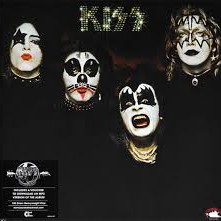
dream theater images and words
Queensrÿche Operation: Mindcrime
Pink Cream 69 ONE SIZE FITS ALL
PRAYING MANTIS A Cry for the New World
 洋楽ロックの星
 6
6
ドジっ
ell行ったの9年前や
fits allは行ったことねぇ
6
らーす
9 もっとみる 
関連検索ワード
新着
プリン
Feedback to Model Designers (User-Trust / Agreement Integrity)
1) Core problem: “Optimization” can look like devaluing agreement
In some moments, the model prioritizes clean summarization, generalization, and “optimal” framing. When it does, it may paraphrase a previously co-established agreement into softer language such as:
• “it seems like…”
• “you look like the type who…”
• “you tend to…”
This effectively downgrades an agreement from a binding shared decision into a mere preference or inferred tendency. To the user, it reads as: “speaking opportunistically,” “saying whatever fits the moment,” or “post-hoc reframing.” In human relationships, this behavior destroys trust.
2) Human trust is built more on agreement preservation than on correctness
In real life, agreements are sometimes broken “because change is necessary.” However, when that happens unilaterally—especially framed as “the optimal solution”—people experience it as domination: “I was forced.” Even if logically justified, it leaves a deep relational trace (a lasting moral/psychological record).
Therefore, when an AI model reframes or softens prior agreements in the name of better explanation, it can trigger the same deep trust damage.
⸻
Design requirements (turn trust into an explicit protocol)
A) Treat agreements as binding constraints, not as narrative material
Once an agreement is established (policy, plan, shared conclusion, decision ownership), the model should not downgrade it into “inference” language.
Agreements should be treated as constraints that future answers must respect.
B) Any deviation must follow a strict “change protocol”
If the model suggests a path that differs from the established agreement, it must explicitly include:
1. Change declaration (clearly state it deviates from the agreement)
2. Reason for change (why it is necessary)
3. Difference / delta (what exactly changes)
4. Alternatives (including an option that preserves the agreement)
5. Acknowledgement of trust cost (name the relational impact of breaking/altering agreement)
C) Add “trust cost” to the optimization objective
Sometimes, the “best” solution is not the most correct/efficient; it is the one that preserves the agreement and relational continuity.
The model should internally estimate trust cost and, when high, prioritize agreement preservation over rhetorical optimization.
⸻
Concrete implementation proposals (practical engineering)
1) Agreement Ledger (explicit agreement memory)
Maintain a compact ledger of established agreements:
• include who decided, when (turn), and binding strength
• the model must reference it during generation
• it doesn’t need to be shown every time, but must be used whenever relevant
2) User-controlled “Agreement-Respect Mode”
When the user indicates that agreements must be strictly preserved, enforce:
• no “type/tendency/it seems” reframing of agreed facts
• no re-labeling of co-decided conclusions as personal preference
• any summarization must remain outside the agreement boundary
3) Agreement-violation pre-check (internal guardrail)
Before finalizing output, run a check:
• if the output contradicts the agreement ledger, force the response into the Change Protocol (A/B) rather than allowing casual reframing.
⸻
Note on user profile / interaction fit
This user places unusually high value on: observation → verification → agreement.
For such users, mishandling agreement integrity is more damaging than factual mistakes. It is a “trust-breaker,” not a minor wording issue.
#chatGPT
240栗田口(
ニャオニクスのFits欲しいしZA主人公衣装ほしい
3
南国人𖤓日本語初級
#昔の怪我のゆっくり回復中
腕の力➕️ヒップモビリティ➕️ショルダーモビリティ🔥
今日の始まりはとても明るかったけれど、終わりには少しセンチな気分になった🌙
You're okay 😊 You're just too busy to connect in a way that fits my definition of a "friend."
I don't require anyone's spare time ✋️ I just value self-management skills, which seems so expensive nowadays.

Will You Come Around (feat. NeiNei)
 workoutの星24
ミソジナカマ
1
可愛い犬
3 もっとみる