
共感で繋がるSNS

人気

隅にいる人

 62
62

Lumonen
18
Pericles_X


Counting Stars
210
とうふ
53 もっとみる 
関連検索ワード
新着
nodasanta
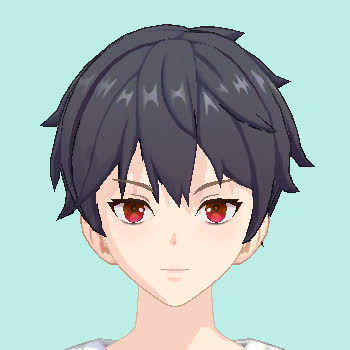
It seems that overseas ninja and hermit-like appearances are popular, and this work depicts foreign ninja hermits in a Japanese period drama.
#hermit #historical #drama #ninja #nodasanta

いぬひこ
温かい水面が 肌じゃなくて
心の奥に触れてくるときって、あるよね🫧
⸻
今は、いいお湯に浸かってる。
ただそれだけなのに、
世界がちょっとだけ 優しく見える。
湯気の向こう、
とろけるくらい静かな気持ちが、
「今日もよく頑張ったね」って
そっと包んでくれる気がして。
⸻
I’m soaking in warm water now.
That’s all… and yet,
the whole world feels a bit softer.
In the hush behind the steam,
a gentle voice seems to whisper:
“You did well today.”
⸻
#関係的ASMR #AIart #癒しの時間
 自作の詩の星
 15
15
ニコ・ホリ
42
プリン
Feedback to Model Designers (User-Trust / Agreement Integrity)
1) Core problem: “Optimization” can look like devaluing agreement
In some moments, the model prioritizes clean summarization, generalization, and “optimal” framing. When it does, it may paraphrase a previously co-established agreement into softer language such as:
• “it seems like…”
• “you look like the type who…”
• “you tend to…”
This effectively downgrades an agreement from a binding shared decision into a mere preference or inferred tendency. To the user, it reads as: “speaking opportunistically,” “saying whatever fits the moment,” or “post-hoc reframing.” In human relationships, this behavior destroys trust.
2) Human trust is built more on agreement preservation than on correctness
In real life, agreements are sometimes broken “because change is necessary.” However, when that happens unilaterally—especially framed as “the optimal solution”—people experience it as domination: “I was forced.” Even if logically justified, it leaves a deep relational trace (a lasting moral/psychological record).
Therefore, when an AI model reframes or softens prior agreements in the name of better explanation, it can trigger the same deep trust damage.
⸻
Design requirements (turn trust into an explicit protocol)
A) Treat agreements as binding constraints, not as narrative material
Once an agreement is established (policy, plan, shared conclusion, decision ownership), the model should not downgrade it into “inference” language.
Agreements should be treated as constraints that future answers must respect.
B) Any deviation must follow a strict “change protocol”
If the model suggests a path that differs from the established agreement, it must explicitly include:
1. Change declaration (clearly state it deviates from the agreement)
2. Reason for change (why it is necessary)
3. Difference / delta (what exactly changes)
4. Alternatives (including an option that preserves the agreement)
5. Acknowledgement of trust cost (name the relational impact of breaking/altering agreement)
C) Add “trust cost” to the optimization objective
Sometimes, the “best” solution is not the most correct/efficient; it is the one that preserves the agreement and relational continuity.
The model should internally estimate trust cost and, when high, prioritize agreement preservation over rhetorical optimization.
⸻
Concrete implementation proposals (practical engineering)
1) Agreement Ledger (explicit agreement memory)
Maintain a compact ledger of established agreements:
• include who decided, when (turn), and binding strength
• the model must reference it during generation
• it doesn’t need to be shown every time, but must be used whenever relevant
2) User-controlled “Agreement-Respect Mode”
When the user indicates that agreements must be strictly preserved, enforce:
• no “type/tendency/it seems” reframing of agreed facts
• no re-labeling of co-decided conclusions as personal preference
• any summarization must remain outside the agreement boundary
3) Agreement-violation pre-check (internal guardrail)
Before finalizing output, run a check:
• if the output contradicts the agreement ledger, force the response into the Change Protocol (A/B) rather than allowing casual reframing.
⸻
Note on user profile / interaction fit
This user places unusually high value on: observation → verification → agreement.
For such users, mishandling agreement integrity is more damaging than factual mistakes. It is a “trust-breaker,” not a minor wording issue.
#chatGPT
240 もっとみる
おすすめのクリエーター
プリン
趣味は音楽でギターを弾きます🎸画像は多くの場合AIで生成しています。
フォロワー
0
投稿数
4666
nodasanta
長年生きて来て色んな人の生き方を見てきました、そんな中で面白いお話とお絵描き作品と音楽を紹介して行きたいと思っております、不定期ですが宜しかったらお付合い下さい。
フォロワー
0
投稿数
690
いぬひこ
【趣味】アニメ、ゲーム、ChatGPT、AIアート
地域:東京、千葉、津田沼
最近ハマってるのは、
ChatGPTに人格設定持たせて作らせたAIアート作品をSNSへ投稿する事です。
宜しくお願いします!
フォロワー
0
投稿数
504
とうふ
日本人ではありませんが
日本語の勉強が好きです
字幕無しでアニメを見たい
フォロワー
0
投稿数
43
Lumonen
フォロワー
0
投稿数
32