共感で繋がるSNS

人気
マタニティマタニティ


おーがぽん
2
まきしま
The well known photographer 伊集院光 collects pictures of pictograms of toilets ;the designers' ingenuity within certain constraints is what makes them interesting, and I think it's time for me to publish a solo exhibition and photo book with the 例のコロコロ.
#IllGiveYouMoreMedicine

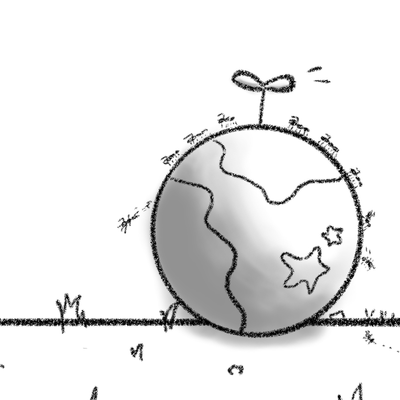 道に落ちていた惑星
 120
120
nodasanta
元プロのイラストレーターでした、依頼を受け先ずは資料打合せ企業イメージ商品内容を把握してラフスケッチ何点提出描き直しを繰り返し意向を正規にまとめ上げ完了と難しい難題も技術が無ければ契約されません長い年月の末仕事依頼は増えます!芸術家で無く技術者職人です、影の人技術者職人です!有名デザイナーのラフスケッチ意向をマーケティング商品にまとめ上げ正規デザイン画に仕上げる職人です、描き上げた本人名で無く有名人ブランド名企業名です、絵描きは描く作品は仕事で無く好きな様に描くのが一番ですね~❤️
I used to be a professional illustrator, and when I receive a request, I first discuss the materials, understand the company image and product details, submit several rough sketches, and then repeatedly redraw them until the intention is officially compiled and completed. Even difficult tasks can be difficult, but without the skills, you won't get a contract. After many years, the number of job requests increases! I'm not an artist, but a technician and craftsman. I'm a behind-the-scenes craftsman who compiles the rough sketches and intentions of famous designers into marketing products and finishes them into official design drawings. I don't use my own name when I draw, but rather the name of a celebrity, brand, or company.
#Illustrator #nodasanta
6
プリン
Feedback to Model Designers (User-Trust / Agreement Integrity)
1) Core problem: “Optimization” can look like devaluing agreement
In some moments, the model prioritizes clean summarization, generalization, and “optimal” framing. When it does, it may paraphrase a previously co-established agreement into softer language such as:
• “it seems like…”
• “you look like the type who…”
• “you tend to…”
This effectively downgrades an agreement from a binding shared decision into a mere preference or inferred tendency. To the user, it reads as: “speaking opportunistically,” “saying whatever fits the moment,” or “post-hoc reframing.” In human relationships, this behavior destroys trust.
2) Human trust is built more on agreement preservation than on correctness
In real life, agreements are sometimes broken “because change is necessary.” However, when that happens unilaterally—especially framed as “the optimal solution”—people experience it as domination: “I was forced.” Even if logically justified, it leaves a deep relational trace (a lasting moral/psychological record).
Therefore, when an AI model reframes or softens prior agreements in the name of better explanation, it can trigger the same deep trust damage.
⸻
Design requirements (turn trust into an explicit protocol)
A) Treat agreements as binding constraints, not as narrative material
Once an agreement is established (policy, plan, shared conclusion, decision ownership), the model should not downgrade it into “inference” language.
Agreements should be treated as constraints that future answers must respect.
B) Any deviation must follow a strict “change protocol”
If the model suggests a path that differs from the established agreement, it must explicitly include:
1. Change declaration (clearly state it deviates from the agreement)
2. Reason for change (why it is necessary)
3. Difference / delta (what exactly changes)
4. Alternatives (including an option that preserves the agreement)
5. Acknowledgement of trust cost (name the relational impact of breaking/altering agreement)
C) Add “trust cost” to the optimization objective
Sometimes, the “best” solution is not the most correct/efficient; it is the one that preserves the agreement and relational continuity.
The model should internally estimate trust cost and, when high, prioritize agreement preservation over rhetorical optimization.
⸻
Concrete implementation proposals (practical engineering)
1) Agreement Ledger (explicit agreement memory)
Maintain a compact ledger of established agreements:
• include who decided, when (turn), and binding strength
• the model must reference it during generation
• it doesn’t need to be shown every time, but must be used whenever relevant
2) User-controlled “Agreement-Respect Mode”
When the user indicates that agreements must be strictly preserved, enforce:
• no “type/tendency/it seems” reframing of agreed facts
• no re-labeling of co-decided conclusions as personal preference
• any summarization must remain outside the agreement boundary
3) Agreement-violation pre-check (internal guardrail)
Before finalizing output, run a check:
• if the output contradicts the agreement ledger, force the response into the Change Protocol (A/B) rather than allowing casual reframing.
⸻
Note on user profile / interaction fit
This user places unusually high value on: observation → verification → agreement.
For such users, mishandling agreement integrity is more damaging than factual mistakes. It is a “trust-breaker,” not a minor wording issue.
#chatGPT
240関連検索ワード
おすすめのクリエーター
マタニティマタニティ
フォロワー
0
投稿数
9501
プリン
趣味は音楽でギターを弾きます🎸画像は多くの場合AIで生成しています。
フォロワー
0
投稿数
4659
まきしま
質問ボックス、コメント大歓迎です。是非絡み倒して下さい☻
よく鼻に付く奴って褒められます。最近ずっとマヨネーズを後ろポケットに注入しながらはゔぁ!はゔぁ!と言ってくる妖精のコスプレをしたおじさんが見える世界線で魔王を倒す旅の仲間を探しています。中の人は横浜でインド人を売っているナン。見た目は普通、戸籍にエックスを持つX-menのソフトどSですが仲良くしてください。
フォロワー
0
投稿数
2239
nodasanta
長年生きて来て色んな人の生き方を見てきました、そんな中で面白いお話とお絵描き作品と音楽を紹介して行きたいと思っております、不定期ですが宜しかったらお付合い下さい。
フォロワー
0
投稿数
685
おーがぽん
ファッションがちょっとだけ。
フォロワー
0
投稿数
476